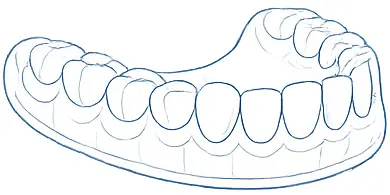
A small chip can change the outline of an otherwise attractive tooth. Dental bonding can rebuild the missing portion using composite resin selected to coordinate with the color and translucency of the surrounding enamel.
The material is placed directly onto the affected area and carefully shaped to restore a natural edge. Attention is given to the length, curve, thickness, and surface texture so the repaired tooth blends with the rest of the smile rather than appearing bulky or artificial.
Bonding may be especially useful for minor chips involving the front teeth. Before treatment, the tooth is examined to confirm that the damage is primarily cosmetic and does not require a crown, root canal, or another restorative procedure.
Small spaces between teeth can sometimes be reduced with dental bonding. Composite material is added to the sides of one or more teeth, gradually changing their width and creating a more continuous appearance across the smile.
Successful gap closure requires careful planning. Adding too much width can make a tooth look disproportionate or create areas that are difficult to clean. Dr. Vo considers the size of the opening, the shape of the surrounding teeth, gum position, and bite before recommending bonding.
Larger gaps or spaces caused by tooth movement may be better addressed with orthodontic treatment. When bonding is appropriate, however, it can provide an immediate cosmetic improvement without moving the teeth.
Not every tooth develops with the same length, width, or contour. A tooth may appear noticeably shorter than its neighbor, have a pointed edge, or look narrower than surrounding teeth. Dental bonding can add subtle volume where it is needed to create greater balance.
Because the resin is shaped directly on the tooth, the design can be adjusted throughout the appointment. The contour is refined from several angles and evaluated alongside the complete smile before the material receives its final polish.
This treatment is often chosen when the desired change is limited to one or two teeth. It may also be included in a broader cosmetic plan involving teeth whitening, gum contouring, or orthodontic treatment.
Some areas of discoloration do not respond completely to professional whitening. A tooth may have an isolated white mark, darker spot, or internal color difference that remains visible even when the surrounding enamel becomes brighter.
Bonding can conceal certain localized stains by placing a thin layer of color-matched composite over the affected area. The shade is selected with care so the restoration coordinates with nearby teeth in both natural and artificial light.
If whitening is part of your cosmetic plan, it will generally be completed before bonding. Composite resin does not lighten with whitening products, so establishing the preferred tooth shade first allows the bonded material to be matched more accurately.
Dental bonding and porcelain veneers can address some of the same cosmetic concerns, but they involve different materials, preparation requirements, costs, and expected lifespans. Bonding is sculpted directly on the tooth and frequently requires little or no enamel removal.
Porcelain veneers are custom-made restorations that cover the front surfaces of the teeth. They may provide greater resistance to staining and can be better suited for more extensive changes involving several teeth, significant discoloration, or broader alterations in shape.
Bonding may be preferred for smaller corrections, patients seeking a more conservative starting point, or situations where an efficient single-visit treatment is desired. Dr. Vo can explain the advantages and limitations of both options based on your smile and long-term goals.
Composite bonding is durable, but it is not indestructible. Biting hard objects, chewing ice, opening packaging with the teeth, or experiencing an injury can cause the material to chip, roughen, stain, or separate from the tooth.
Minor concerns may be corrected by smoothing, polishing, or adding new material to the existing restoration. When the bonding has become extensively worn or discolored, replacing it may provide a more predictable result.
Changes in the natural teeth can also affect how older bonding looks. For example, newly whitened teeth may become brighter than previously placed composite. Periodic evaluations help identify when polishing, repair, shade adjustment, or replacement should be considered.