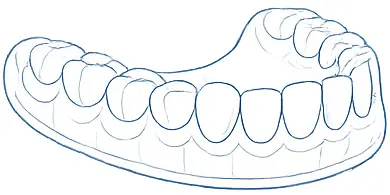
A sports mouth guard covers the teeth and helps cushion impact during athletic activity. It is generally worn over the upper teeth, although individual needs may require a different design.
The guard should remain stable without requiring constant clenching. A secure fit allows the athlete to speak, breathe, and focus on the activity rather than repeatedly adjusting the appliance.
Material thickness may vary according to the sport and level of contact. A guard designed for martial arts may require different protection than one intended for recreational basketball.
Consistent use matters. The guard can only provide protection when it is worn during practice as well as competition, because injuries often happen during routine drills and informal play.
Children are often active before they fully understand the long-term consequences of a dental injury. A mouth guard can protect permanent teeth during the years when sports and outdoor activities become more frequent.
The child’s teeth and jaw continue changing as growth occurs. New teeth may erupt, baby teeth may be lost, and orthodontic treatment may begin. The guard should therefore be checked regularly for fit.
A guard that becomes tight, distorted, or uncomfortable should not be forced into place. It may need adjustment or replacement to avoid pressure on developing teeth.
Choosing a comfortable design can improve cooperation. Children are more likely to wear a guard consistently when it fits securely and does not interfere unnecessarily with breathing or communication.
Braces create additional surfaces inside the mouth that can press against the lips and cheeks during an impact. A mouth guard designed for orthodontic treatment provides room for brackets, wires, and expected tooth movement.
A standard tightly fitted guard may not be appropriate because the teeth are actively changing position. The appliance should accommodate this movement without becoming locked around the brackets.
Orthodontic mouth guards may require periodic replacement as treatment progresses. The fit should be monitored whenever wires are changed or noticeable tooth movement occurs.
Patients should report broken brackets, bent wires, or mouth injuries after an impact even when the guard was worn. The appliance reduces risk but does not make orthodontic components immune to damage.
Crowns, bridges, veneers, implants, and bonded restorations can be damaged by direct impact. A custom mouth guard helps reduce the force transferred to these areas during sports.
The guard is designed around the contours of existing dental work so it does not place unnecessary pressure on restoration margins or implant crowns.
Patients who have completed extensive cosmetic or restorative treatment may benefit from replacing an older generic guard with a custom appliance that reflects the current shape of the smile.
If dental work changes after the guard is created, the fit should be reevaluated. A new crown, bridge, filling, or orthodontic movement may prevent the appliance from seating properly.
Store-bought guards offer convenient access and may provide more protection than wearing no appliance. However, the fit depends on standardized sizing or at-home molding.
A loose guard may move during activity, while an overly bulky guard can interfere with speech and breathing. Some athletes clench continuously to keep the appliance in place, which may cause fatigue.
A custom guard is created from the patient’s exact dental anatomy. The thickness, extension, and fit can be adjusted according to the sport and oral condition.
The most effective guard is one the patient will wear consistently. Comfort and stability are therefore important parts of protection rather than cosmetic conveniences.
Mouth guards gradually wear from chewing, clenching, cleaning, heat exposure, and routine use. The material may thin, split, become rough, or lose its original fit.
Children and orthodontic patients may outgrow a guard before the material is visibly damaged. Changes in tooth position can make the appliance tight or unstable.
A guard should be replaced if it no longer remains in place, develops sharp edges, has visible tears, or causes pressure on specific teeth.
Dr. Vo can evaluate the appliance during routine dental visits and determine whether it still provides appropriate coverage and protection.