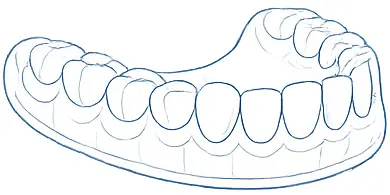
Nighttime grinding, also known as sleep bruxism, involves repeated movement or pressure between the upper and lower teeth during sleep. Patients may not know it is occurring until signs of wear or damage appear.
Flattened biting surfaces, small enamel cracks, shortened teeth, rough edges, and fractured fillings may indicate repeated grinding. A partner may also hear grinding sounds during the night.
A custom guard creates a barrier between the arches. Instead of the teeth wearing directly against one another, the appliance receives much of the surface contact.
The guard should be monitored because heavy grinding can eventually wear through or distort the material. Damage to the appliance provides useful information about the amount and location of pressure.
Clenching involves holding the teeth together with prolonged pressure, often without the sliding movement associated with grinding. This may occur during sleep or while awake.
Patients who clench may experience tooth soreness, muscle tightness, fatigue around the cheeks or temples, and sensitivity when biting. Restorations may also loosen or fracture under repeated load.
A night guard can distribute pressure across a broader surface and reduce concentrated contact on individual teeth. The design must be adjusted carefully so the guard does not create new areas of excessive force.
Daytime clenching may also benefit from awareness and behavioral changes. Patients can practice keeping the teeth slightly apart when not eating or swallowing.
Crowns, veneers, bridges, implant restorations, and bonded teeth are designed to function under normal bite pressure. Grinding and clenching can expose them to repeated forces beyond ordinary chewing.
A custom guard can protect ceramic surfaces from direct contact and help reduce the risk of chipping. It may be especially important after extensive cosmetic or reconstructive treatment.
The appliance must fit accurately around restoration margins without pulling on crowns or placing unwanted pressure on implant-supported teeth.
If dental work changes after the guard is created, the appliance should be reevaluated. A new restoration may prevent complete seating or change the contact pattern.
Muscles responsible for closing the jaw can become overworked when clenching or grinding occurs repeatedly. Patients may wake with tightness, soreness, fatigue, or discomfort near the temples and cheeks.
A night guard may reduce some muscle strain by changing how the teeth contact and providing a smoother surface for jaw movement.
However, muscle discomfort can have several causes. Stress, posture, joint inflammation, bite changes, sleep conditions, and other factors may also contribute.
Dr. Vo evaluates symptoms and may recommend additional care when a guard alone is unlikely to address the complete problem.
Store-bought night guards are available in standard or boil-and-bite designs. They may provide temporary separation between the teeth but often feel bulky or fit unevenly.
An appliance that does not fit securely may shift during sleep, create pressure on selected teeth, or encourage chewing on the material.
A custom guard is created from the patient’s exact dental anatomy and adjusted against the opposing teeth. This allows the contact pattern to be controlled more precisely.
The appropriate material and thickness are selected according to the severity of grinding, bite relationship, comfort, and existing restorations.
Night guards can require adjustment when they are first delivered or after dental treatment changes the bite. Small refinements may improve comfort and create more even contact.
Over time, the guard may become scratched, worn, loose, tight, or distorted. Heavy grinders may create visible grooves or holes in the material.
A damaged appliance should not automatically be repaired at home. Household adhesives and uncontrolled reshaping can affect the fit and introduce unsafe materials.
Dr. Vo can determine whether the guard needs polishing, adjustment, repair, or complete replacement.