A single-tooth implant replaces one missing tooth with an implant post and custom crown. The implant is placed within the jawbone and supports the visible restoration above the gum line.
This design avoids preparing neighboring teeth for a traditional bridge. Each surrounding tooth remains independent, which can make home care more similar to cleaning between natural teeth.
The implant must be positioned with the final crown in mind. Bone availability, gum contours, tooth spacing, and bite pressure all influence where the foundation should be placed.
After healing, the crown is created to coordinate with nearby teeth. The contact points, shape near the gum, and relationship with the opposing tooth are adjusted to support comfort and function.
An implant-supported bridge replaces several adjacent teeth using a smaller number of implants as anchors. This approach can restore a continuous section of the smile without requiring an individual implant for every missing tooth.
The number of implants depends on the length of the space, available bone, location within the mouth, and chewing forces. A back-tooth bridge may require a different design than a restoration replacing visible front teeth.
Implant-supported bridges remain fixed in place. They must be cleaned carefully beneath the replacement teeth and around each implant to prevent plaque accumulation.
Planning considers both surgical and restorative needs. The implant positions must support the completed bridge while allowing the replacement teeth to have natural proportions and maintainable contours.
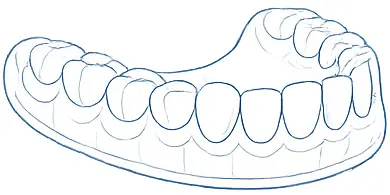
Dental implants can improve the stability of a full or partial denture. Depending on the design, the restoration may snap onto implant attachments or remain fixed and removable only by the dental team.
Greater stability can reduce movement during speaking and chewing. Many patients also feel more confident because the restoration is less likely to shift unexpectedly.
The number and position of implants vary according to the jaw, bone availability, prosthetic design, and desired level of support. A removable implant overdenture has different requirements than a fixed full-arch restoration.
Even when a denture is supported by implants, the gums and implant components require daily care. Removable restorations must also be cleaned outside the mouth according to instructions.
Dental implants require adequate bone for stable placement. After tooth loss, the jaw may gradually change in height and width, particularly when the tooth has been missing for a long time.
Bone grafting adds material to an area where additional volume is needed. The graft may be completed at the time of extraction, before implant placement, or during implant surgery depending on the amount of reconstruction required.
Not every patient needs grafting. Three-dimensional imaging and clinical evaluation help determine whether the existing bone can support an implant in the planned position.
Healing time depends on the size and location of the graft. Larger areas may require a separate healing phase before the implant can be placed predictably.
In selected situations, an implant may be placed during the same appointment in which a damaged tooth is removed. Immediate placement can reduce the number of surgical visits, but it is not appropriate for every extraction site.
The surrounding bone must provide enough stability, and active infection or extensive structural damage may influence whether the implant can be placed safely.
Immediate implant placement does not always mean the final tooth is attached on the same day. A temporary restoration may be possible in certain cases, while others require a healing period before the implant is placed under full chewing pressure.
Dr. Vo evaluates the socket, gum tissue, bone quality, and cosmetic demands before recommending an immediate approach.
Implants depend on healthy gum and bone support. Plaque around the implant can cause inflammation and, if left unmanaged, may contribute to loss of supporting tissue.
Home care should include brushing around the implant and cleaning between the restoration and neighboring teeth. Bridges and full-arch restorations may require threaders, interdental brushes, or specialized cleaning tools.
Professional visits allow the dental team to examine the tissue, assess the bite, monitor bone levels when necessary, and evaluate the condition of screws, attachments, crowns, or dentures.
Grinding and clenching can place excessive force on implant restorations. A protective night guard may be recommended to reduce wear and mechanical complications.